
Physique conditioning is often presented as a straightforward objective: reduce body fat, maintain muscle, and improve overall definition.
In practice, achieving a well conditioned physique involves considerably more planning. Training quality, nutrition, recovery, body composition, fatigue management, and individual physiology all influence how an athlete looks and performs over time.
Masteron, commonly associated with drostanolone, is frequently discussed within bodybuilding communities in the context of physique conditioning. Understanding where such compounds fit into the broader performance conversation requires looking beyond reputation and considering the complete training and health picture.
What Defines a Well Conditioned Physique
Conditioning is not simply a measure of bodyweight.
A well developed physique reflects the relationship between muscular development, body fat, proportions, and overall presentation.
Two athletes at the same bodyweight can look dramatically different because their levels of lean tissue and body fat are different.
This is why successful conditioning generally begins with establishing an appropriate body composition strategy rather than focusing exclusively on the number displayed on the scales.
The Importance of Structured Training
Resistance training provides the foundation for maintaining and developing muscle.
During a conditioning phase, training should continue to provide an appropriate stimulus without creating more fatigue than the athlete can recover from.
Exercise selection, training frequency, intensity, and volume all need to work together.
Increasing training volume indefinitely is rarely the answer.
An athlete who adds more sessions, more sets, and more cardiovascular work without considering recovery can eventually experience declining performance.
The objective should be productive training rather than maximum training.
Masteron in the Broader Performance Discussion
Masteron is the common bodybuilding name associated with drostanolone, an anabolic androgenic steroid originally developed for medical use.
Within bodybuilding discussions, it is frequently associated with physique focused phases and conditioning.
The broader Masteron Injectable Steroids category represents this particular area of the anabolic steroid market.
However, the existence of a product category does not establish that its contents are appropriate or safe for a particular individual.
Anabolic steroids can influence natural hormone production and may carry risks involving cardiovascular health, cholesterol, blood pressure, fertility, mood, and other physiological systems.
Anyone considering anabolic steroid exposure should understand these risks and seek appropriate medical guidance.
Why Conditioning Cannot Be Reduced to One Compound
Physique development is the result of multiple variables.
Nutrition determines energy availability.
Resistance training provides the muscular stimulus.
Cardiovascular activity can support fitness and energy expenditure.
Sleep and recovery allow the body to adapt.
Genetics influence how an individual responds.
A pharmacologically active compound cannot replace these fundamentals.
This distinction becomes particularly important when online discussions make individual compounds appear responsible for an entire physique transformation.
The reality is considerably more complicated.
Nutrition During Conditioning
Nutrition becomes particularly important when the objective is reducing body fat.
A sustainable calorie deficit can support gradual reductions in body fat while appropriate protein intake and resistance training help preserve lean tissue.
The size of the deficit matters.
An extremely aggressive diet may produce rapid changes on the scale, but it can also increase hunger, fatigue, and reductions in training performance.
A more controlled approach allows an athlete to monitor progress and make adjustments when necessary.
Maintaining Muscle While Getting Leaner
One of the major challenges during conditioning is maintaining as much lean tissue as possible while reducing body fat.
This requires an appropriate training stimulus and sufficient nutritional support.
Strength performance can also provide useful information.
If an athlete experiences a gradual reduction in performance as bodyweight decreases, some decline may be expected. However, a substantial or prolonged drop can indicate that fatigue, nutrition, or recovery needs reassessment.
The goal is not simply to become lighter.
The goal is to improve body composition.
Recovery Determines Training Quality
Recovery is often underestimated during demanding physique phases.
A calorie deficit combined with frequent resistance training and additional cardiovascular work can create considerable physiological stress.
Sleep therefore becomes an important part of the programme.
Hydration, rest periods, appropriate training volume, and stress management can also influence recovery capacity.
If recovery deteriorates, simply adding another training session may make the situation worse.
A well structured conditioning programme should account for recovery from the beginning rather than treating it as an afterthought.
Understanding Individual Response
Individual response is one of the most important considerations when discussing performance compounds.
Age, genetics, previous exposure, baseline health, training history, body composition, nutrition, sleep, and medications can all influence outcomes.
This means that anecdotal experiences should be interpreted carefully.
An approach that someone reports as successful does not automatically provide evidence that another person will experience the same outcome.
This is especially relevant with anabolic steroids because their physiological effects extend beyond muscle development.
Product Quality and Research Context
Product descriptions can contain terms such as research grade, formulation accuracy, batch consistency, traceability, and professional documentation.
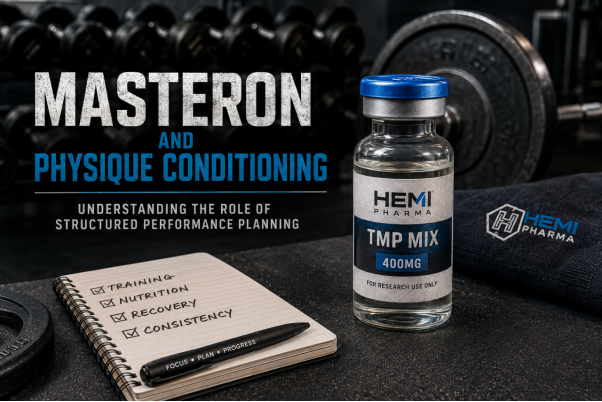
For example, the supplied description for Hemi Pharma TMP Mix 400mg presents it as a research oriented formulation intended for laboratories, authorised distributors, and controlled research environments, with emphasis on formulation consistency and documentation.
Those claims should remain distinct from claims about human performance or suitability.
A product being described as research oriented does not establish that it is approved for human use, medically appropriate, or safe to use for physique enhancement.
This distinction is important when evaluating information published online.
Monitoring Progress Beyond the Mirror
Visual appearance is useful, but it should not be the only measure of progress.
Athletes can also monitor:
- Bodyweight trends.
- Waist measurements.
- Training performance.
- Recovery.
- Sleep quality.
- Energy levels.
- Cardiovascular fitness.
- Nutrition consistency.
Looking at several indicators provides a more accurate picture than relying on photographs alone.
Temporary changes in water retention, glycogen, and digestive contents can also alter appearance and bodyweight without representing meaningful changes in body fat.
Managing Fatigue During Conditioning
Fatigue becomes increasingly relevant as an athlete becomes leaner.
Training that was manageable at a higher calorie intake may become more demanding during a prolonged deficit.
This is why experienced programmes often use deliberate adjustments in volume and intensity.
A temporary reduction in workload can allow accumulated fatigue to fall while maintaining important movement patterns and training consistency.
The objective is to arrive at the desired level of conditioning without completely compromising performance along the way.
Health Should Remain Part of the Strategy
Physique goals should not be separated from health.
Anabolic steroids can affect cardiovascular markers, lipid profiles, natural hormone production, fertility, mood, and other aspects of physiology.
Some effects may not be immediately visible.
An athlete can look lean and perform well while still experiencing unfavourable changes in health markers.
This is why appropriate medical monitoring is important whenever pharmacologically active hormones or anabolic steroids are involved.
Building a Sustainable Conditioning Phase
A strong conditioning strategy is built around several connected components.
Training maintains the muscular stimulus.
Nutrition controls energy availability.
Recovery supports adaptation.
Monitoring provides objective feedback.
Adjustment keeps the programme sustainable.
When these components are aligned, athletes can make measured changes rather than reacting to every short term fluctuation.
This is particularly useful during longer conditioning phases, where consistency often matters more than dramatic interventions.
Where Performance Research Fits
Researching performance categories can help athletes understand terminology, product classifications, pharmacology, and potential risks.
However, research should not be confused with a recommendation to use a particular anabolic steroid.
The same principle applies to individual products.
Understanding what a product is and how it is described is different from establishing whether it is appropriate for human use.
Keeping those distinctions clear makes performance research more responsible and more useful.
Building a More Refined Approach to Conditioning
The strongest physique strategies generally focus on controllable variables first.
Training should be structured.
Nutrition should be sustainable.
Recovery should be protected.
Progress should be measured.
Adjustments should be based on actual trends rather than frustration with short term results.
Masteron and other anabolic steroid categories may remain part of bodybuilding discussions, but they represent only one part of a much larger performance landscape.
The fundamentals of physique development remain consistent regardless of the approach being researched.
Building a Conditioned Physique Over Time
A refined physique is rarely created through one training block or one intervention.
It develops through months and years of consistent resistance training, appropriate nutrition, recovery, and careful management of body composition.
The more experienced an athlete becomes, the more important these details tend to become.
Conditioning is therefore best approached as a long term process rather than a race toward the fastest possible visual change.
Better planning creates better feedback.
Better feedback creates better decisions.
And better decisions provide a stronger foundation for continued physique development.