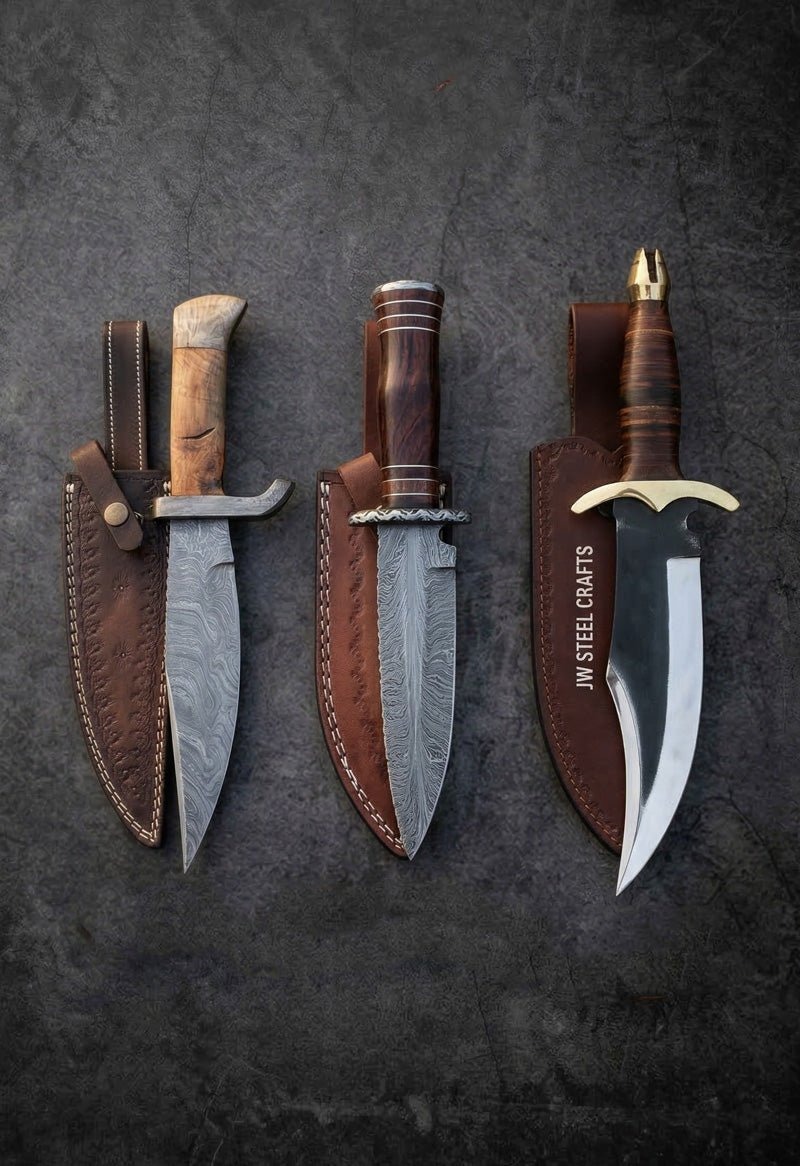

A California custom knife show is one of the best places to find a hunting knife with real character. Makers set up tables full of handmade blades, and you can pick each one up, test the balance, and ask how it was made. That kind of access is hard to match online. If you want a sense of the quality to expect before you go, browsing a range of premium hunting knives shows what good steel, clean grinds, and well-finished handles look like.
California’s hunting country is varied, from Sierra Nevada blacktail and mule deer to wild hogs in the coastal ranges and waterfowl in the Central Valley. The right knife depends on what you hunt, and a show gives you the chance to match the blade to the work.
Not every beautiful knife at a show is a good hunting knife, though. Some are made mainly for display. A dependable hunter should combine practical blade geometry, sound steel, and a handle you can trust with wet hands. A well-made piece like this handmade stainless steel tracker knife with a ram horn and wenge wood handle is a good example of function and artistry in one blade. Below is a guide to the styles and features worth your attention.
Why a California Custom Knife Show Is Worth Attending
Custom knife shows are built around makers and collectors, so the quality is generally higher than at a general gun or outdoor expo.
Meet the Makers Behind the Blades
Talking to the person who forged the knife tells you more than a tag ever will. Ask about their steel, heat treatment, and why they chose a particular blade shape.
Compare Handmade and Semi-Custom Work Side by Side
You can see how different makers approach the same pattern. That makes it easy to judge differences in grind quality, handle fit, and finishing.
Request a Custom Order
Many makers take commissions at shows. You can specify your preferred steel, handle material, blade length, and sheath style, often getting a knife tailored to your hunting needs.
Best Hunting Knife Styles to Look For
Drop Point Hunters
The drop point is the most versatile hunting pattern. Its curved spine gives a strong, controllable tip that reduces the risk of puncturing organs during field dressing, while the belly handles skinning well.
What to look for: a blade of 3.5 to 4.5 inches, a sturdy spine, and an even grind.
Tracker Knives
Tracker-style knives are known for a bold, purposeful profile and a comfortable, secure grip, which makes them popular for general field use. They suit hunters who want one capable blade for dressing, skinning, and camp work.
What to look for: a full-tang build, a well-shaped handle with no hot spots, and a blade that feels balanced in hand.
Skinning Knives
Skinners have a pronounced belly and a shallow point for separating hide from meat cleanly. For deer and hog hunters, a dedicated skinner makes processing faster and tidier.
What to look for: a strong curve, a thin, keen edge, and a handle that stays grippy when wet.
Caping and Bird-and-Trout Knives
Small, nimble blades of 2 to 3 inches are ideal for caping trophy animals and for delicate work on small game and birds.
What to look for: a fine tip, precise control, and a lightweight sheath.
Bowie and Camp-Style Knives
Larger blades handle heavier camp chores along with game processing. They are also a favorite among collectors.
What to look for: good balance for the size, a robust tang, and a quality leather sheath.
Choosing the Right Blade Steel
Steel determines edge retention, corrosion resistance, and toughness. Always ask the maker what steel they use and how it was heat treated.
Stainless Steel for Wet and Coastal Conditions
Stainless steels such as 440C, VG-10, S30V, and 154CM resist rust, which helps in damp coastal hunts and when cleaning game. They need less maintenance, which is a real advantage in the field.
High-Carbon Steel for Toughness and Easy Sharpening
Steels like 1095, 5160, and O1 take a razor edge and sharpen easily, but they need regular oiling to prevent rust.
Damascus and Tool Steels
Damascus offers striking patterns, though quality varies, so buy from reputable makers. Tool steels like D2 and CPM-3V have excellent wear resistance but are harder to sharpen.
Best Handle Materials for Hunting Knives
The handle is where a knife earns its keep. It must stay secure when wet, cold, or bloody.
Natural Materials: Horn, Wood, and Bone
Ram horn, stabilized hardwoods like wenge, and bone give a knife warmth and individuality. Quality stabilization and a good finish keep them durable in the field.
Synthetic Materials: Micarta and G10
Micarta and G10 are extremely tough and weather resistant, with excellent grip. They are the practical choice for hard use.
Hold every knife in several grips. A good handle has no sharp edges and fits your hand naturally.
How to Inspect a Custom Hunting Knife Before Buying
Quality Checklist
- Grind lines: clean and symmetrical from heel to tip.
- Fit and finish: no gaps, glue residue, or uneven pins.
- Tang: full tang for strength, with solid pins or fasteners.
- Edge: evenly ground and truly sharp.
- Balance: comfortable and controllable.
- Sheath: well stitched and secure.
Red Flags to Avoid
Be cautious of vague answers about steel, loose handles, uneven grinds, and prices that don’t match the quality.
California Knife Laws and Show Buying Tips
Know the Rules Before You Carry
California regulates knives more strictly than many states. For example, a fixed blade carried concealed on the person can be treated as an illegal dirk or dagger, so fixed blades are generally carried openly in a sheath, and certain folding and automatic knives face length and type restrictions. Rules can change, so check current state and local laws, and transport purchases securely, such as in a sheath or box in your vehicle.
Smart Buying Tips
- Set a budget before you enter.
- Walk the full floor first to compare makers.
- Bring cash, as it can help with pricing and some vendors don’t take cards.
- Ask about sheaths, since a good sheath is part of the knife.
- Ask about warranty and sharpening or care guidance.
Final Thoughts
The best hunting knives at a California custom knife show combine proven design with honest craftsmanship: a drop point, tracker, or skinner profile, full-tang strength, quality steel, and a handle that stays secure in any weather. To keep comparing handmade options after the show, browse more premium hunting knives and find one that fits your hand and your hunting style.
Frequently Asked Questions (FAQs)
What is the best hunting knife to buy at a California custom knife show?
A full-tang, fixed-blade drop point or tracker knife is a strong all-around choice. Both handle field dressing, skinning, and camp tasks well.
What is a tracker knife used for?
A tracker knife is a robust, general-purpose field knife used for dressing and skinning game and for camp tasks. Its comfortable grip and strong profile make it popular with hunters.
Which steel is best for a hunting knife?
Stainless steels like S30V and VG-10 resist rust in wet conditions, while high-carbon steels like 1095 and 5160 are tough and easy to sharpen.
Are handmade hunting knives worth the price?
For most hunters, yes. Handmade knives usually offer better materials, careful heat treatment, and precise finishing, and many makers will customize them.
What is the best handle material for a hunting knife?
Micarta and G10 are the toughest and grippiest. Natural materials like ram horn and wenge wood offer beauty and a comfortable feel when properly finished.
Can I carry a fixed-blade hunting knife in California?
Generally, fixed blades should be carried openly in a sheath rather than concealed. Laws change, so verify current state and local rules before you carry.
Can I negotiate prices at a custom knife show?
Often, yes. Reasonable offers, cash payment, and buying multiple items can help, especially late on the final day.